जौनपुर और शार्की सल्तनत: मध्यकालीन UP को सत्ता, शहर और स्थापत्य से समझें
जौनपुर को केवल वर्तमान जिले के रूप में पढ़ने से उसका इतिहास अधूरा रह जाता है। 14वीं–15वीं शताब्दी में यह शार्की सल्तनत का महत्वपूर्ण regional power centre था। इसके monuments, learning-culture और गोमती किनारे का urban setting ऐसे clues हैं जिनसे exam में dynasty, city और architecture को जोड़ा जा सकता है।
इस article का central idea है: जौनपुर → शार्की सत्ता → गोमती-किनारे का city-centre → distinctive mosque architecture → बाद का Lodi/Mughal context। इससे Atala Masjid, Jami Masjid और Shahi Pul एक ही vague “पुराने जौनपुर” bucket में नहीं जाते।
Map और political setting
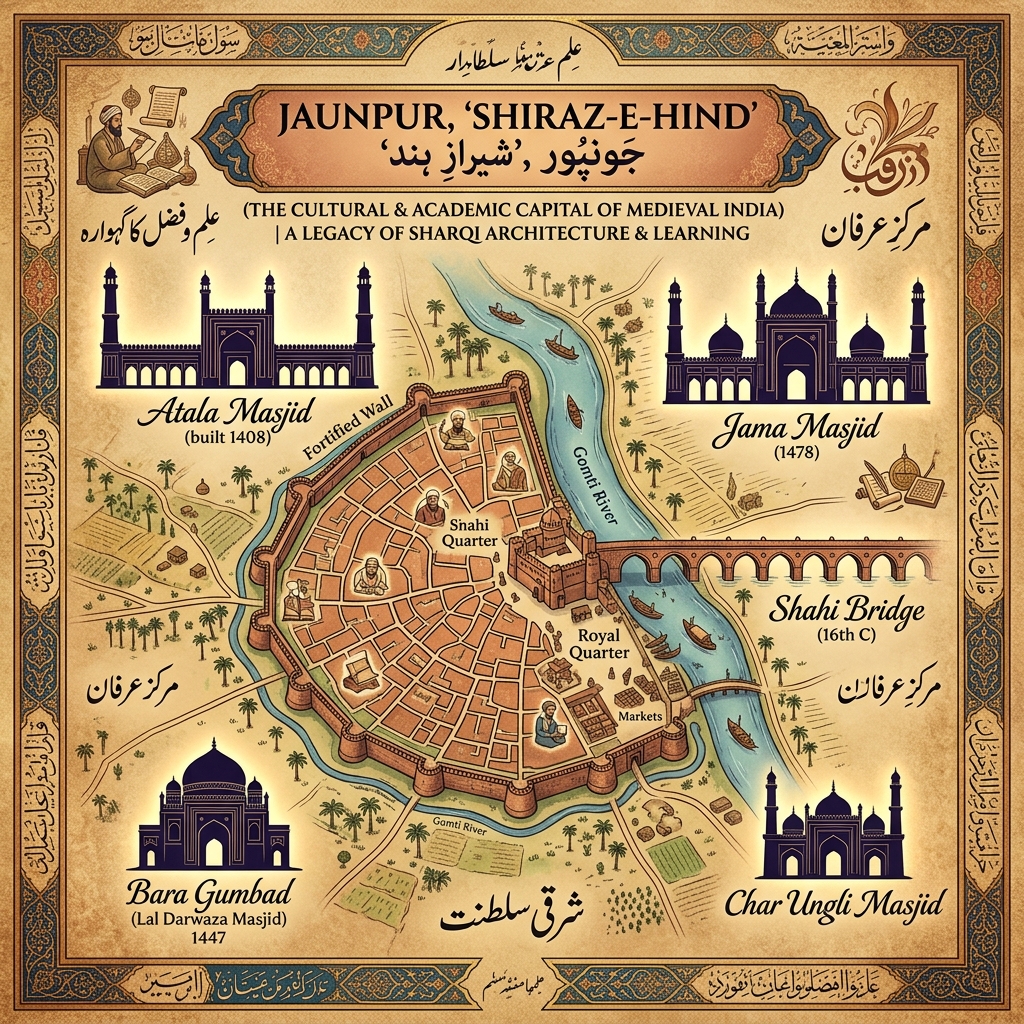
जौनपुर आज पूर्वी UP में वाराणसी मंडल का जिला है। Medieval history में इसे सिर्फ current division से identify न करें; यह उस समय Ganga-Gomti plains के एक important urban/political centre के रूप में उभरा था। गोमती नदी का city geography में महत्व इसलिए है कि urban structures, crossing और fortification के questions में नदी-side setting clue बन सकती है।
पहले अपना map card बनाइए:
| field | answer |
|---|---|
| current anchor | Jaunpur, Varanasi division, eastern UP |
| historical river clue | Gomti river |
| medieval political clue | Sharqi Sultanate |
| architecture clue | Atala Masjid, Jami/Bari Masjid, other Jaunpur-style structures |
| later clue | Lodi takeover; Shahi Pul is Mughal-era, Sharqi नहीं |
आखिरी line सबसे ज्यादा useful है। “जौनपुर का हर monument शार्की है” गलत है; शहर की heritage कई periods में बनी।
शार्की सल्तनत: यह क्यों बनी?
14वीं सदी के अंत में Delhi Sultanate की Tughlaq सत्ता कमजोर पड़ रही थी। इसी wider political fragmentation में Malik Sarwar को 1394 में Jaunpur का governor नियुक्त किया गया; उनका title Malik-us-Sharq/ख्वाजा-ए-जहाँ Sharqi dynasty की पहचान का आधार बना। Jaunpur Sultanate को broadly 1394 से 1479 तक पढ़ा जाता है। इसे “मुगल काल की शाखा” न कहें—यह Delhi Sultanate के weakening phase में उभरी regional sultanate थी।
| चरण | anchor | क्यों पढ़ें |
|---|---|---|
| 1394 | Malik Sarwar और Jaunpur appointment | Sharqi power की शुरुआत का framework |
| 1399–1402 | Mubarak Shah | succession chain का short bridge |
| 1402–1440 | Ibrahim Shah Sharqi | city, architecture और learning-culture का major anchor |
| 1458–1479 | Husain Shah Sharqi | later Sharqi phase और Lodi conflict के पहले का context |
| 1479 | Bahlul Lodi द्वारा Jaunpur पर control | independent Sharqi rule का end marker |
हर exam में पूरा succession नहीं पूछा जाता। Basic answer के लिए Malik Sarwar, Ibrahim Shah Sharqi और Husain Shah Sharqi तीन anchors पर्याप्त होते हैं। Dates तभी लिखें जब प्रश्न timeline, foundation या takeover पूछे।
Ibrahim Shah Sharqi: सबसे उपयोगी ruler-card
Ibrahim Shah Sharqi (1402–1440) को Jaunpur की cultural and architectural flourishing से जोड़कर पढ़ा जाता है। उनके नाम के साथ सबसे high-value monument clue Atala Masjid है। लेकिन “Atala = सिर्फ Ibrahim ने शुरू कराई” कहना अधूरा होगा: Jaunpur district government के history record के अनुसार foundation Firoz Shah Tughlaq ने 1393 में रखी थी और construction Ibrahim Shah Sharqi के समय 1408 में पूरा हुआ।
यह example बताता है कि monument question में foundation और completion अलग facts हो सकते हैं। यदि option में Firoz Shah और Ibrahim Shah दोनों हों, question के verb को देखिए: started/laid foundation या completed/built in final form।
Atala Masjid का revision card
| field | answer |
|---|---|
| place | Jaunpur |
| period/style | Sharqi/Jaunpur style of medieval architecture |
| foundation | Firoz Shah Tughlaq, 1393 (district history record) |
| completion | Ibrahim Shah Sharqi, 1408 |
| exam clue | city + Sharqi rule + mosque architecture |
Atala Masjid को Agra Fort, Rumi Darwaza या Fatehpur Sikri से तुलना करते हुए याद करना गलत options हटाने में मदद करता है: Atala = Jaunpur/Sharqi; Agra Fort/Fatehpur = Mughal; Rumi Darwaza = Nawabi Lucknow।
अन्य monuments: same city, different historical layers
जौनपुर में monuments की list याद करने से पहले उनका period अलग कीजिए।
| monument/site | primary context | safe fact |
|---|---|---|
| Atala Masjid | Sharqi | 1408 completion under Ibrahim Shah Sharqi |
| Jami/Bari Masjid | Sharqi | Ibrahim Shah initiated; Husain Shah completion context is noted by district history |
| Lal Darwaza / Khalis Masjid context | Sharqi city heritage | Ibrahim Shah phase से जुड़े monuments; exact patron/detail source से verify करें |
| Jhanjhari Masjid | Sharqi | Ibrahim Shah associated; later destruction/alteration history separate |
| Shahi Pul | Mughal | Akbar’s reign; district tourism record identifies it as Mughal-era bridge |
| Jaunpur Fort | earlier Tughlaq-origin and later layers | city fort/history, not automatically Sharqi monument |
Shahi Pul is the main trap. It is in Jaunpur but Mughal-era, built during Akbar’s reign according to the district’s tourism/history pages. Geography same है; period अलग है। If a question asks “Sharqi architecture” choose Atala/Jami type clues, not Shahi Pul merely because it is in Jaunpur.
Jaunpur style: feature को overclaim किए बिना पहचानें
Architecture question में heavy technical vocabulary याद करना जरूरी नहीं। नीचे के stable clues पर्याप्त हैं:
- बड़ी, prominent façade और high central arch/portal-like emphasis।
- mosque complexes में local building traditions और Sultanate-era forms का visible combination।
- Jaunpur city में multiple Sharqi-period religious structures, इसलिए एक isolated monument की बजाय city style का reference मिल सकता है।
किसी building के “exact influence” पर scholars के अलग descriptions हो सकते हैं। इसलिए बिना architecture source के “यह केवल Persian”, “यह केवल Hindu” जैसी absolute statements न लिखें। Exam answer में period, city और building type अधिक सुरक्षित है।
Learning, music और cultural identity
Jaunpur की historical identity केवल military power की नहीं रही। District history इसे education, culture, music, arts और literature में important place बताता है। कई books “Shiraz of India” description भी mention करती हैं, लेकिन इसे title-question या source-supported statement के रूप में ही use करें; every answer में decorative phrase डालना जरूरी नहीं।
इस section का aspirant-use यह है कि अगर question education, culture, music और Sharqi को साथ लाए, तो Jaunpur की दिशा में सोचें। अगर question Urdu marsiya/Nawabi culture कहे तो Lucknow; planned Mughal capital कहे तो Fatehpur Sikri; Braj bhakti कहे तो Mathura-Braj context अलग होगा।
Lodi takeover के बाद क्या समझें?
1479 में Bahlul Lodi ने Jaunpur को अपने control में ले लिया। इसका मतलब जौनपुर इतिहास समाप्त होना नहीं है; इसका अर्थ independent Sharqi political rule का अंत है। बाद में Lodi और Mughal periods में city की administrative/architectural layers बनी रहीं। इसलिए question में Sharqi Sultanate का अंत और Jaunpur का इतिहास दो अलग things हैं।
| question wording | answer approach |
|---|---|
| “Sharqi dynasty founder” | Malik Sarwar |
| “major Sharqi architectural ruler” | Ibrahim Shah Sharqi |
| “Atala Masjid completed by” | Ibrahim Shah Sharqi, 1408 |
| “Sharqi rule ended under” | Bahlul Lodi, 1479 |
| “Shahi Pul period” | Akbar/Mughal, not Sharqi |
Jaunpur vs Agra vs Lucknow: one-minute comparison
| city | primary historical label | key clue |
|---|---|---|
| Jaunpur | Sharqi regional sultanate | Atala Masjid, 14th–15th century medieval context |
| Agra/Fatehpur Sikri | Mughal | Akbar, fort/planned city, Taj Mahal later Shah Jahan context |
| Lucknow | Awadh/Nawabi | Imambara, Rumi Darwaza, 1857 Awadh resistance |
इन cities को “सभी मुस्लिम-period cities” कहकर एक bucket में डालना low-quality answer होगा। Correct period और political context ही real distinction है।
30-minute study plan
- पाँच मिनट: map पर Jaunpur और Gomti relation देखें।
- दस मिनट: 1394 → Ibrahim → 1479 sequence बोलें।
- पाँच मिनट: Atala Masjid का foundation/completion card लिखें।
- पाँच मिनट: Shahi Pul को “Mughal, not Sharqi” card पर लिखें।
- पाँच मिनट: Jaunpur–Agra–Lucknow comparison बिना नोट देखें।
Self-check
- Sharqi Sultanate का founder और broad period क्या है?
उत्तर: Malik Sarwar; broadly 1394–1479। - Atala Masjid का foundation और completion किससे जोड़ेंगे?
उत्तर: Firoz Shah Tughlaq ने foundation रखी; Ibrahim Shah Sharqi के समय 1408 में completion। - Shahi Pul को Sharqi answer क्यों नहीं लिखेंगे?
उत्तर: वह Jaunpur में है, लेकिन Akbar/Mughal period का bridge है। - Jaunpur की चार study anchors क्या हैं?
उत्तर: city/Gomti setting, Sharqi power, architecture, culture-learning identity।
अगला relation UP history roadmap में देखिए; monuments comparison के लिए historical heritage guide और Mughal contrast के लिए UP में मुगल इतिहास पढ़ें।
⚠️ यह note परीक्षा तैयारी के लिए है। भर्ती, तारीख या आधिकारिक सूचना के लिए संबंधित विभाग की official website ही अंतिम स्रोत है।