उत्तर प्रदेश प्रशासन और स्थानीय शासन: राज्य से ग्राम/नगर तक साफ hierarchy
UP exams में प्रशासन के प्रश्न अक्सर किसी current officer का नाम नहीं, structure और role पूछते हैं। मंडल, जिला, तहसील, विकासखंड, ग्राम सभा, ग्राम पंचायत, नगर पंचायत और नगर निगम—ये शब्द एक ही level के नहीं हैं। इस article का लक्ष्य आपको सही question को सही level से जोड़ना सिखाना है।
पहला rule: current posting, district count, municipal classification, ward count या government order date-sensitive facts हैं। उन्हें latest official portal/notification से verify करें। नीचे stable constitutional-administrative framework दिया गया है।
पूरी तस्वीर: दो systems साथ चलते हैं
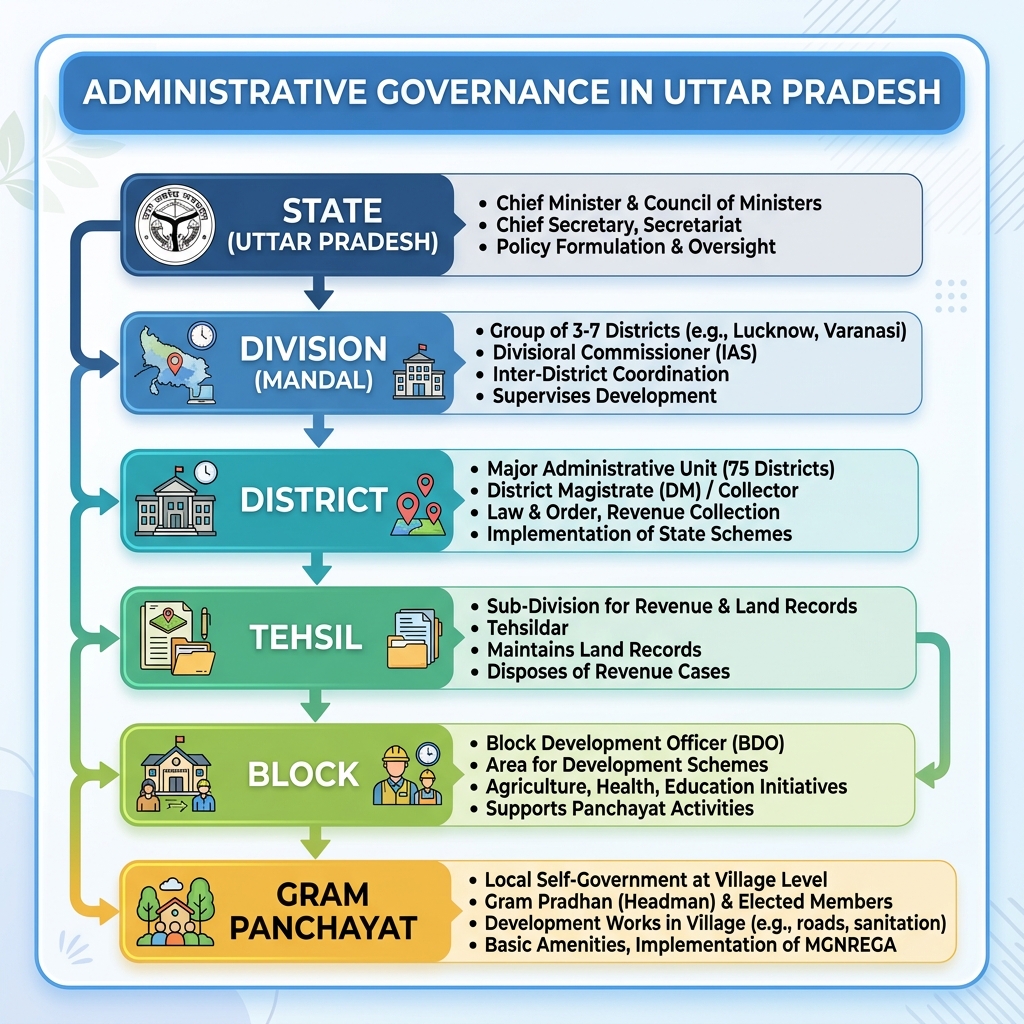
UP में everyday governance को समझने के लिए दो connected but distinct systems याद रखें:
- State administrative/revenue structure: राज्य → मंडल → जिला → तहसील/उपखंड, departments और field administration।
- Local self-government structure: rural areas में ग्राम सभा/ग्राम पंचायत से जिला पंचायत तक; urban areas में नगर पंचायत/नगर पालिका परिषद/नगर निगम।
एक ही village में district administration और elected local body दोनों relevant हो सकते हैं, लेकिन उनके roles identical नहीं होते। इसी reason से DM और Gram Pradhan को एक “same hierarchy” में लिखना गलत है।
State-level constitutional frame
राज्य की executive व्यवस्था में Governor constitutional head हैं; Chief Minister और Council of Ministers elected government की executive leadership देते हैं। Uttar Pradesh legislature bicameral है—Vidhan Sabha और Vidhan Parishad। Departmental administration, budget, laws, schemes और policy decisions इस broader state framework के भीतर आते हैं।
यह short card रखिए:
| institution | basic role |
|---|---|
| Governor | राज्य का संवैधानिक प्रमुख |
| Chief Minister/Council of Ministers | elected executive leadership और policy direction |
| Vidhan Sabha | directly elected legislative house |
| Vidhan Parishad | legislative council; bicameral state legislature का upper house |
| State departments | subject-wise implementation and administration |
यहां “कौन अभी मुख्यमंत्री/राज्यपाल है” अलग current-affairs fact है। उसे static source content में नहीं रखेंगे।
मंडल और जिला: दोनों को अलग समझें
मंडल (Division)
मंडल कई जिलों का administrative group है। इसका practical purpose district-level administration के ऊपर coordination and supervision का layer देना है। Divisional Commissioner/Commissioner का title division context से जुड़ता है। Exam में एक list में कई districts हों और question “administrative group” पूछे, तो division/mandal की दिशा में सोचें।
जिला (District)
जिला state administration की core field unit है। District Magistrate/District Collector/जिलाधिकारी का broad association district-level coordination, general administration, law-and-order/revenue-related responsibilities और government programmes की field oversight से है। Specific statutory power, departmental protocol या current officer name notification/official page के बिना final answer नहीं होना चाहिए।
| clue | सही level |
|---|---|
| कई जिलों का group | मंडल/division |
| district-wide administration/coordination | जिला/DM context |
| land/revenue sub-district | तहसील |
| rural development implementation | विकासखंड/block |
तहसील: revenue और land-administration card
तहसील को “छोटा जिला” या “block का दूसरा नाम” लिखना गलत है। इसका primary relation revenue administration, land records और sub-district field structure से है। Sub-Divisional Magistrate (SDM) और Tehsildar जैसे terms इसी broader sub-district/revenue context में आते हैं। Posts की exact powers rules के अनुसार बदल सकती हैं, इसलिए exam question में duty की exact wording पढ़ें।
तहसील और विकासखंड का comparison
| point | तहसील | विकासखंड/Block |
|---|---|---|
| basic lens | revenue/land administration | rural development and programme implementation |
| common office context | Tehsildar/SDM type revenue setup | Block Development Officer (BDO) and development setup |
| common error | इसे elected panchayat body कहना | इसे revenue subdivision कहना |
| map relation | district के भीतर sub-district unit | rural planning/implementation unit |
यह distinction Lekhpal, VDO और related recruitment exams में high-value है। Lekhpal-related question में land/revenue context देखिए; VDO-related question में development/gram-level programme context। लेकिन exact job description केवल recruitment notification/department rules से ही final करें।
Rural local self-government: 73rd Amendment का framework
73rd Constitutional Amendment ने Panchayati Raj institutions को constitutional status दिया और Constitution में Part IX जोड़ा। Rural local government को सामान्यतः three-tier system के रूप में पढ़ा जाता है:
- Gram Panchayat — village level।
- Kshetra Panchayat / intermediate level — block/intermediate level।
- Zila Panchayat — district level।
Gram Sabha और Gram Panchayat एक ही नहीं हैं।
| term | easy meaning | mistake to avoid |
|---|---|---|
| Gram Sabha | registered voters/body of village area का collective forum | इसे elected executive committee न कहें |
| Gram Panchayat | elected village local body | इसे पूरे block की body न मानें |
| Kshetra Panchayat | intermediate/block-level panchayat structure | district-level Zila Panchayat से न मिलाएँ |
| Zila Panchayat | district-level rural local body | DM office का synonym नहीं |
Pradhan, Panchayat Secretary, VDO और district administration की roles अलग frameworks में आती हैं। किसी scheme में coordination हो सकता है, लेकिन उससे constitutional hierarchy same नहीं हो जाती।
Urban local government: 74th Amendment का framework
74th Constitutional Amendment urban local bodies के constitutional framework से जुड़ा है। Urban areas में broadly तीन categories का exam-oriented distinction उपयोगी है:
| urban body | broad settlement clue | याद रखने का तरीका |
|---|---|---|
| Nagar Panchayat | transitional/smaller urbanising area | rural से urban transition |
| Nagar Palika Parishad | smaller/medium urban local body | municipality context |
| Nagar Nigam | larger urban corporation | city corporation context |
Exact municipal status, current city category और number of wards change हो सकते हैं। इसलिए “कौन-सा शहर आज किस category में” हमेशा current official urban development/local bodies portal से verify करें। Rural panchayat (Gram Panchayat) और city body (Nagar Nigam) को same column में answer देना basic error है।
कौन किस काम से broadly जुड़ता है?
यह table exact legal duties की exhaustive list नहीं, exam-level role recognition है।
| scenario in question | पहले किस level को सोचें | क्यों |
|---|---|---|
| district-wide relief/coordination or field administration | DM/district administration | district is the main field unit |
| mutation, land record, revenue sub-division | tehsil/revenue setup | land-revenue lens |
| rural development programme implementation | development block/BDO setup | block development lens |
| village electorate meeting/body | Gram Sabha | voters’ collective forum |
| elected village local institution | Gram Panchayat | local rural body |
| district-level rural elected body | Zila Panchayat | local self-government, not DM office |
| city civic services/local urban body | Nagar Palika/Nagar Nigam context | urban governance lens |
| districts across a larger region | division/mandal | group of districts |
If wording uses “elected”, first ask whether it is rural or urban local body. If wording uses “revenue”, do not jump to Panchayat. If wording says “multiple districts”, do not answer tehsil.
District administration और Panchayat: एक example
मान लीजिए प्रश्न कहता है कि village-level public participation का forum क्या है। Answer Gram Sabha की direction में है, district officer नहीं। यदि प्रश्न भूमि अभिलेख/revenue sub-division पर है, answer tehsil context में जाएगा। यदि प्रश्न district-wide disaster coordination का है, district administration/DM context अधिक relevant है। और यदि question rural elected district body पूछे, Zila Panchayat सही direction है।
यह four-way separation बहुत questions solve कर देता है:
participation → Gram Sabha; elected village body → Gram Panchayat; revenue → Tehsil; district administration → DM/district.
7-day revision routine
| day | task |
|---|---|
| 1 | state → division → district → tehsil hierarchy draw करें |
| 2 | tehsil vs block comparison बिना notes लिखें |
| 3 | Gram Sabha, Gram Panchayat, Kshetra Panchayat, Zila Panchayat cards |
| 4 | Nagar Panchayat, Nagar Palika, Nagar Nigam comparison |
| 5 | 10 scenarios को correct level से match करें |
| 6 | current facts के लिए official portals से two examples verify करें |
| 7 | केवल wrong cards revise करें |
Common confusions
- मंडल को district और Zila Panchayat को district administration मानना।
- तहसील और development block को same unit लिखना।
- Gram Sabha और Gram Panchayat को interchangeable कहना।
- Zila Panchayat को DM/Collector office कहना।
- नगर पंचायत को rural Gram Panchayat का urban name मानना।
- current office-holder, ward count या municipal status को undated note से पढ़ना।
Self-check
- State administrative hierarchy और rural panchayat hierarchy अलग-अलग लिखिए।
- 73rd और 74th Amendment किस broad governance field से जुड़े हैं?
उत्तर: 73rd—rural Panchayati Raj; 74th—urban local bodies। - Tehsil और Block का one-line difference लिखिए।
- Gram Sabha और Gram Panchayat में कौन-सा voter forum है?
उत्तर: Gram Sabha। - Multiple districts coordination किस level का clue है?
उत्तर: Mandal/division।
Current district/division mapping के लिए जिले और मंडल, constitutional foundation के लिए General Studies और UP-specific exam practice के लिए UP GK handbook खोलें।
⚠️ यह note परीक्षा तैयारी के लिए है। भर्ती, तारीख या आधिकारिक सूचना के लिए संबंधित विभाग की official website ही अंतिम स्रोत है।