उत्तर प्रदेश की संस्कृति: region, craft, performance और fair को सही context में पढ़ें
UP culture के सवालों में एक ही pattern बार-बार आता है: एक form या craft का नाम दिया जाता है और आपसे city, region, material, performance style या cultural setting पूछा जाता है। यदि आपने सिर्फ “important crafts” list रटी है, तो similar options में गलती होगी। हर item को चार fields में पढ़िए:
नाम → मुख्य city/region → form/material → cultural setting या पहचान।
GI tag, current festival schedule, latest award, export number या official scheme change हो सकते हैं। वे इस evergreen study guide का हिस्सा नहीं हैं; source और date के साथ अलग current-affairs card बनाइए।
UP का practical culture map
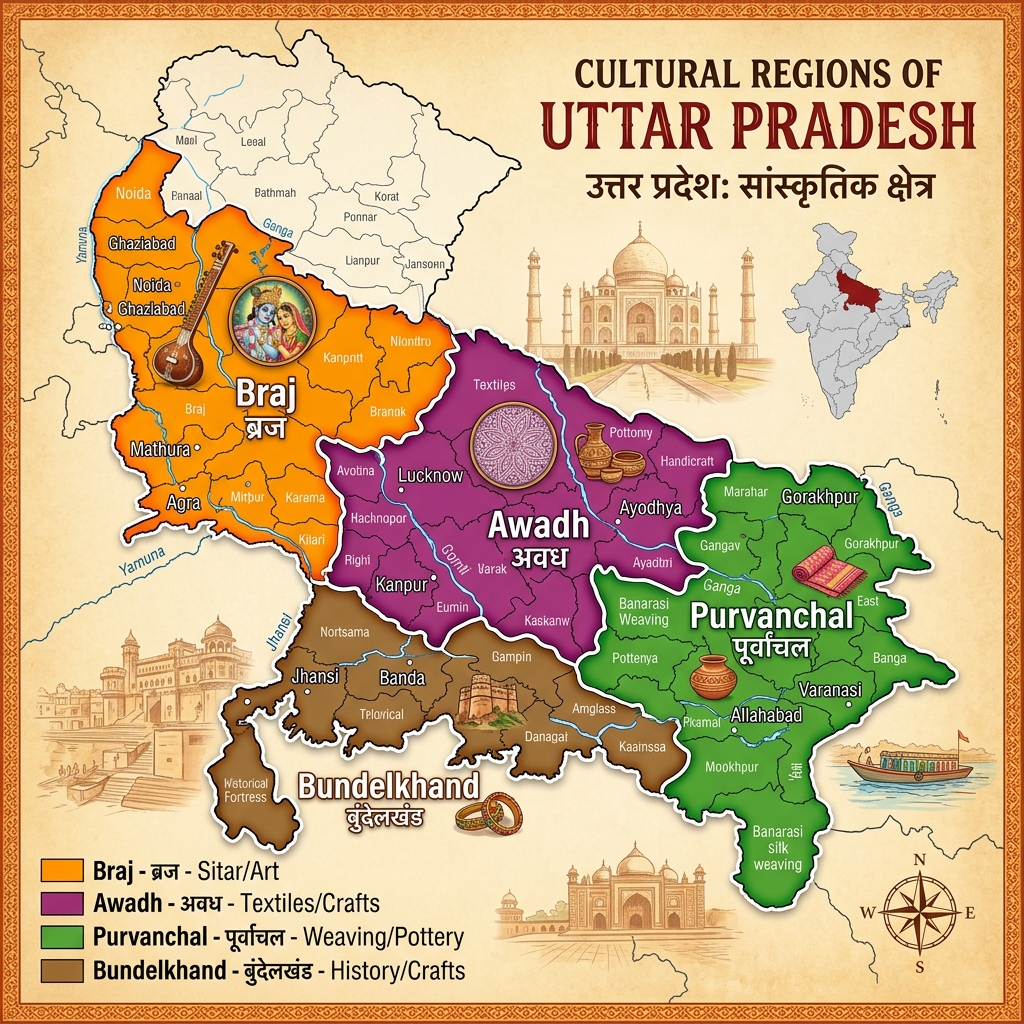
यह formal boundary map नहीं, revision map है। Cultural regions overlapping हो सकते हैं।
| region | memory anchor | key examples |
|---|---|---|
| Braj | Mathura–Vrindavan/Agra side, Krishna tradition | Raslila, Brajbhāṣā, Charkula, Sanjhi |
| Awadh/Lucknow | Nawabi urban culture | Kathak Lucknow gharana, chikankari, Urdu adab, marsiya |
| Purvanchal/Varanasi–Bhadohi–Jaunpur | religious city, weaving, music, folk traditions | Banarasi textile, Bhadohi carpet, Kajri/Birha contexts |
| Bundelkhand | Jhansi–Chitrakoot–Banda side | Alha singing, Rai dance, rugged regional context |
| western/north-western UP | craft and folk clusters | Saharanpur woodcraft, Moradabad metalware, Khurja pottery |
| Kannauj belt | fragrance/craft city identity | attar/perfumery |
एक city के पास दस associations हो सकते हैं। Exam answer में वही association लिखें जो question की language मांगती है। Lucknow का question craft पर हो तो Chikankari; dance पर हो तो Kathak gharana; 1857 पर हो तो Begum Hazrat Mahal/Awadh resistance—इनको एक paragraph में merge न करें।
Lucknow और Awadh: craft, dance, literature की अलग cards
Chikankari
Chikankari Lucknow से जुड़ी fine hand-embroidery tradition है। इसका material/technique clue delicate embroidery work है; इसे Banarasi silk weaving, Moradabad brass या Saharanpur carving से न मिलाएँ। Question अगर embroidery, Lucknow craft या white-on-fabric style जैसे clues दे, chikankari direction में सोचें। Exact stitch count/market data static fact नहीं है।
Kathak का Lucknow gharana
Kathak एक classical dance form है; Lucknow gharana उसका important style tradition है। इसे “Lucknow की folk dance” न लिखें। Gharana शब्द style/school context देता है। Question classical dance, Lucknow gharana, abhinaya/nawabi court culture कहे तो Kathak card relevant है। Kathak के Jaipur/Banaras gharanas की comparative detail अलग dance syllabus में पढ़ें।
Urdu adab और marsiya
Lucknow Urdu literary culture, marsiya tradition और Nawabi urban life से जुड़ा major centre है। Mir Anis और Mirza Dabeer को marsiya tradition से जोड़ना more precise है than simply “Urdu poet।” साहित्य और व्यक्तित्व में their person-cards अलग दिए हैं।
Braj: Krishna tradition को performance और language से जोड़ें
Braj cultural region में Krishna-related traditions, Brajbhāṣā literature और performance forms जुड़े मिलते हैं। इसे only modern Mathura district list न समझें।
| form/tradition | region/context | practical clue |
|---|---|---|
| Raslila | Braj/Mathura–Vrindavan | Krishna narrative performance tradition |
| Brajbhāṣā | Braj cultural region | Surdas/Raskhan and Krishna-bhakti literary context |
| Charkula | Braj folk dance context | folk dance, not Kathak |
| Sanjhi | Braj devotional/folk art tradition | decorative/ritual art context |
Raslila को “किसी भी Hindi drama” या Charkula को classical dance कह देना गलत होगा। Form, region और category तीनों लिखिए।
Varanasi and Purvanchal: textile, music, festivals और folk voice
Banarasi textile tradition
Varanasi/Banaras का strongest craft association Banarasi silk brocade/weaving tradition है। silk, brocade, zari, Banaras type clue इस card की ओर ले जाता है। इसे Lucknow’s chikankari (embroidery) या Bhadohi carpet (floor textile) से अलग रखें।
Varanasi की music and cultural-city identity
Varanasi is also a major classical music and cultural-city anchor. But “Benares gharana” prompt किस art form में है, पहले देखें—music, tabla, dance या other tradition के specificity अलग हो सकती है। Without exact question/source, हर classical artist को Varanasi से attach न करें. City’s broader literary-religious context is separate from its textile card.
Bhadohi carpet
Bhadohi is widely associated with carpet weaving. Exam card: Bhadohi → carpet → weaving/floor textile. Do not write Banarasi silk for Bhadohi, or carpet for Varanasi, simply because both are eastern UP craft clusters.
Kajri और Birha
Kajri eastern UP/Varanasi-Mirzapur side monsoon folk-song tradition के context में आती है। Birha eastern UP/Bhojpuri folk music tradition का important clue है। दोनों folk music हैं, but same form नहीं। Question यदि season/monsoon कहे तो Kajri; singing style/oral folk tradition clue में Birha की दिशा अधिक relevant हो सकती है।
Bundelkhand: geography के साथ folk tradition
Bundelkhand culture को plain/Awadh copy की तरह न पढ़ें। Jhansi, Chitrakoot, Banda, Mahoba side का rugged plateau, historical memories और folk performance इस region की identity बनाते हैं।
| form | region | study clue |
|---|---|---|
| Alha | Bundelkhand | वीर-गाथा/ballad singing tradition |
| Rai dance | Bundelkhand | regional folk dance context |
| Bundeli language | Bundelkhand | regional language, not Awadhi/Bhojpuri |
Alha को modern patriotic song या Kathak category में न डालें। It is a ballad tradition. Rai को dance form के रूप में, और Bundeli को language-region card के रूप में अलग revise करें।
Western and central craft anchors
| craft | primary city/region | material/identity clue | common mix-up |
|---|---|---|---|
| brassware | Moradabad | metal craft | Firozabad glass नहीं |
| wood carving | Saharanpur | carved wood | metalware नहीं |
| pottery | Khurja | ceramic/pottery | Kannauj attar नहीं |
| glass bangles/glasswork | Firozabad | glass industry/craft | Moradabad brass नहीं |
| attar/perfumery | Kannauj | natural fragrance/distillation tradition | Chikankari/embroidery नहीं |
| carpet weaving | Bhadohi | woven carpet | Banarasi silk garment textile नहीं |
इन crafts को city and material pair में memorize करें। “famous for” alone insufficient है। Material clue से option eliminate करना अधिक reliable होता है: wood → Saharanpur, brass → Moradabad, glass → Firozabad, fragrance → Kannauj, pottery → Khurja.
Fairs, religious gatherings और festivals: place first, date later
Fairs/festivals में exact annual date lunar calendar, official schedule या administrative arrangements से बदल सकती है। इसलिए evergreen card में name → place → broad occasion/tradition लिखें।
| event/tradition | place | stable cultural clue |
|---|---|---|
| Kumbh/Magh Mela context | Prayagraj | Sangam and large religious gathering tradition |
| Dev Deepawali | Varanasi | Ganga ghats and Kartik-period cultural-religious observance |
| Lathmar Holi | Barsana/Nandgaon, Braj | Braj Holi tradition |
| Taj Mahotsav | Agra | craft/culture event linked to Agra heritage context |
| Bateshwar fair | Agra district region | traditional fair and river-side/local cultural context |
Current dates, official theme, duration, crowd/visitor numbers or latest government label should never be published as timeless information. Check tourism/district administration sources for those.
Folk theatre और performance forms: category पहचानिए
| form | category | broad region/context | do not call it |
|---|---|---|---|
| Nautanki | folk theatre/music-drama | north India including UP cultural context | a classical dance |
| Raslila | devotional performance | Braj | generic folk song |
| Kathak | classical dance | Lucknow/other gharana traditions | folk dance |
| Alha | oral heroic ballad | Bundelkhand | a fair or craft |
| Kajri | seasonal folk song | eastern UP | a dance by default |
| Birha | folk singing tradition | Bhojpuri/eastern UP | a classical raga category |
Question may ask only “which is a folk dance?” or “which is a folk song?” Category first identify करें, then region. That is safer than learning names alphabetically.
Culture और history का relation
Culture article history को replace नहीं करती। Use this comparison:
| city | history anchor | culture anchor |
|---|---|---|
| Lucknow | Awadh/Nawabi and 1857 | Chikankari, Kathak gharana, Urdu/marsiya |
| Varanasi | ancient Kashi and Sarnath-nearby context | Banarasi textile, music, Dev Deepawali |
| Jaunpur | Sharqi Sultanate | education/music/arts urban identity |
| Mathura/Braj | ancient/religious history | Raslila, Brajbhāṣā, Charkula |
| Agra | Mughal monuments | Taj Mahotsav, Bateshwar regional fair context |
If the question asks “built by whom?”, history card. If “which craft/form?”, culture card. If “where?” the city card decides it.
30-minute revision method
- Five-region outline बनाइए: Braj, Awadh, Purvanchal, Bundelkhand, west/central craft belt।
- हर region में two culture cards लिखें।
- Material-only test करें: brass, wood, glass, perfume, pottery, carpet, silk, embroidery।
- Form-only test करें: classical dance, folk theatre, ballad, seasonal song, devotional performance।
- अगले दिन city देखकर craft/form reverse recall करें।
Common mistakes
- Chikankari और Banarasi textile दोनों को weaving लिखना।
- Kathak को Lucknow की folk dance कहना।
- Kajri, Birha और Alha को same type of folk form मानना।
- Shahi Pul/monument history और Jaunpur culture card को confuse करना।
- current GI/festival schedule/craft export claim को source-date के बिना publish करना।
- city name सही, material गलत लिखना।
Self-check
- Lucknow embroidery? Chikankari।
- Moradabad material? Brass/metalware।
- Saharanpur craft? Wood carving।
- Kannauj? Attar/perfumery।
- Bhadohi? Carpets।
- Braj devotional performance? Raslila।
- Bundelkhand heroic ballad? Alha।
- Eastern UP monsoon folk song? Kajri।
भाषा-personality links के लिए साहित्य, भाषाएँ और व्यक्तित्व, city history के लिए UP history roadmap, और current locations के लिए जिले और मंडल को साथ पढ़ें।
⚠️ यह note परीक्षा तैयारी के लिए है। भर्ती, तारीख या आधिकारिक सूचना के लिए संबंधित विभाग की official website ही अंतिम स्रोत है।