उत्तर प्रदेश के वन, संरक्षित क्षेत्र और वन्यजीव: habitat से समझने वाला guide
वन्यजीव GK में सिर्फ park का नाम रटना कमजोर तैयारी है। प्रश्न park या sanctuary?, किस जिले/region में?, terai, wetland या plateau?, किस species/habitat का relation? किसी भी रूप में आ सकता है। इसलिए हर entry का card बनाएँ: नाम → category → location → habitat → one verified association।
यह article current animal census, visitor fee या seasonal bird count नहीं देता, क्योंकि वे date-sensitive होते हैं। ऐसे facts केवल latest forest/official notification से लें। यहाँ stable geography और exam-useful associations पर focus है।
UP के चार environment zones
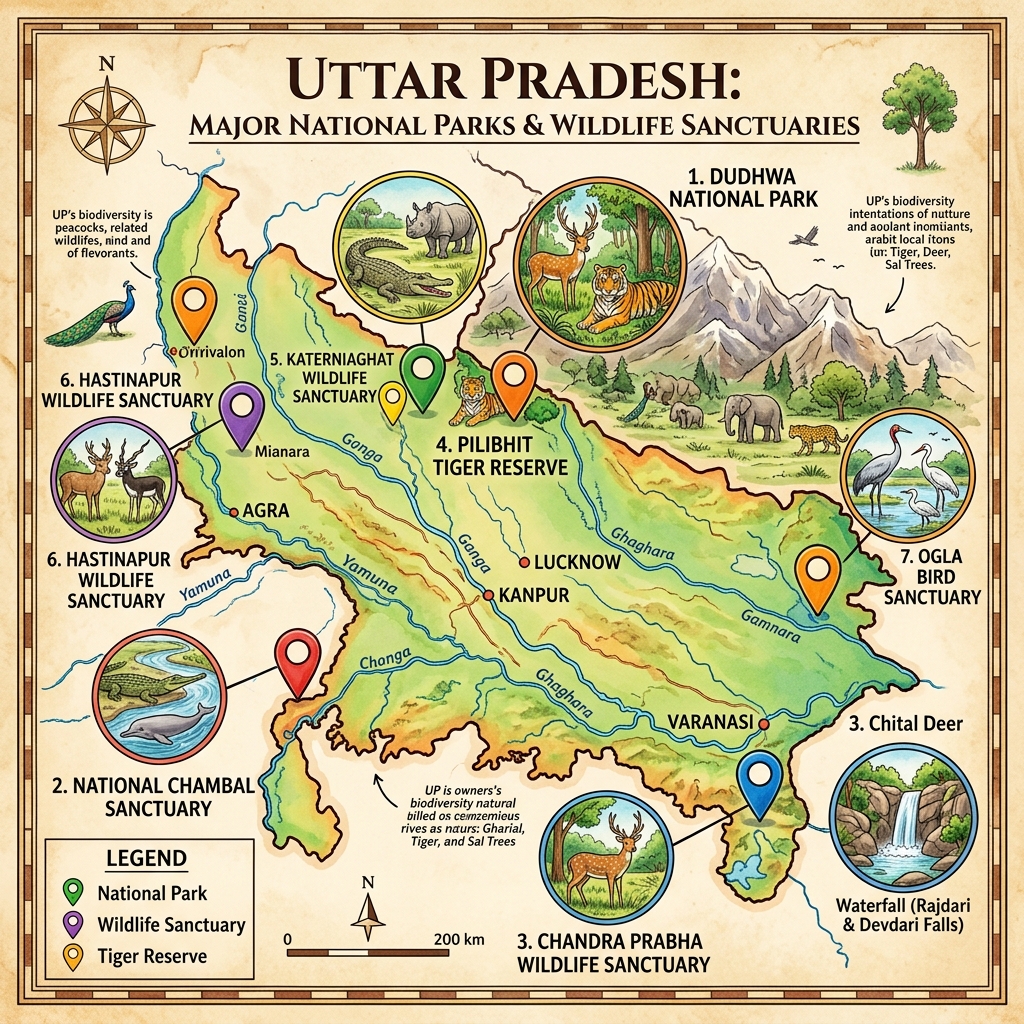
| zone | broad location | habitat clue | exam use |
|---|---|---|---|
| तराई | नेपाल सीमा के पास northern UP | grassland, sal forest, marsh, rivers | Dudhwa/Kishanpur/Katarniaghat cluster |
| गंगा-यमुना floodplain और wetlands | plains, central/western/eastern pockets | shallow water, migratory birds, riverine ecology | bird sanctuary/wetland questions |
| चंबल ravines | south-western river landscape | river, ravine, aquatic/reptile habitat | Chambal-linked conservation question |
| विंध्य/दक्षिण-पूर्वी plateau | Mirzapur–Sonbhadra–Chandauli side | dry deciduous forest, hills, plateau | Chandra Prabha/Kaimur context |
पहले zone पहचानिए, फिर exact site चुनिए। “वन है” सुनकर हर answer Dudhwa नहीं हो सकता; और “bird” सुनकर हर answer Okhla नहीं होता।
Dudhwa landscape: UP wildlife का main terai cluster
दुधवा राष्ट्रीय उद्यान Lakhimpur Kheri district में है और northern terai context का सबसे important anchor है। इसके आसपास के conservation landscape में Kishanpur Wildlife Sanctuary और Katarniaghat Wildlife Sanctuary भी आते हैं; इन तीनों का relation समझना useful है, पर इन्हें एक ही category न लिखें। Dudhwa Tiger Reserve का broader framework National Park और adjoining sanctuaries को जोड़ता है।
| entry | category/context | location anchor | याद रखने की बात |
|---|---|---|---|
| Dudhwa National Park | national park; terai conservation landscape का core | Lakhimpur Kheri | UP national park/terai question का primary answer |
| Kishanpur Wildlife Sanctuary | wildlife sanctuary | Lakhimpur Kheri side | Dudhwa landscape से जुड़ा, पर National Park नहीं |
| Katarniaghat Wildlife Sanctuary | wildlife sanctuary | Bahraich/तराई belt | river-forest-terai context; Dudhwa cluster का adjoining component |
इस cluster को terai → grassland/wet forest → large mammal habitat → protected-area network के रूप में पढ़िए। बारहसिंगा (swamp deer) Dudhwa association का important clue है; इसे state animal वाले fact से अलग रखकर पढ़ें। उत्तर प्रदेश का state animal बारहसिंगा और state bird सारस है—यह static state-symbol card है, जबकि किसी park में current population अलग, changing fact है।
Dudhwa पर प्रश्न कैसे आएँगे?
- “उत्तर प्रदेश का राष्ट्रीय उद्यान” → Dudhwa National Park।
- “तराई क्षेत्र और बारहसिंगा” → Dudhwa landscape की दिशा में सोचें।
- “Kishanpur/Katarniaghat” → sanctuary category और terai cluster।
- “Tiger Reserve” → Dudhwa Tiger Reserve का wider unit; National Park और reserve में difference रखें।
Wetland और bird sanctuary: पानी का प्रकार पहले समझें
Wetland question में river, lake, marsh, floodplain, seasonal waterbody और bird habitat अलग words हो सकते हैं। Bird sanctuary का मतलब यह नहीं कि वहाँ केवल एक species है, और Ramsar status/notification का current detail बिना official source नहीं लिखना चाहिए।
| site | district/region anchor | category clue | revision angle |
|---|---|---|---|
| Okhla Bird Sanctuary | Gautam Buddh Nagar, Yamuna-side | bird sanctuary/wetland | NCR–Yamuna context |
| Nawabganj Bird Sanctuary (Shaheed Chandra Shekhar Azad Bird Sanctuary) | Unnao | bird sanctuary/wetland | old and renamed official names को एक card पर रखें |
| Saman Bird Sanctuary | Mainpuri | bird sanctuary/wetland | central-western plains bird habitat |
| Samaspur Bird Sanctuary | Rae Bareli | bird sanctuary/wetland | district pairing के लिए useful |
| Lakh Bahosi Bird Sanctuary | Kannauj | bird sanctuary/wetland | name–district matching |
| Bakhira Wildlife Sanctuary | Sant Kabir Nagar | wetland-oriented wildlife sanctuary | eastern UP wetland context |
| Soor Sarovar Bird Sanctuary | Agra | bird sanctuary | Agra = केवल Mughal monuments नहीं, ecology card भी |
Nawabganj का renamed title एक common objective trap है। दोनों names एक ही card पर लिखना अच्छा है, लेकिन spelling/final official label exam notification या current government page से check करें। Saman और Samaspur के names similar लगते हैं—district column ही उन्हें अलग रखता है।
सारस को कैसे पढ़ें?
सारस उत्तर प्रदेश का state bird है। Wetland, paddy field और open water landscape के questions में इसका ecological context याद आता है, लेकिन “सारस = हर bird sanctuary” गलत है। State symbol card और protected-area location card अलग रहें।
नदी और ravine context: National Chambal Sanctuary
National Chambal Sanctuary एक interstate conservation landscape है और UP में Etawah–Auraiya side के Chambal river context से जोड़ा जाता है। यह terai forest नहीं है। इसका clue riverine habitat, ravines और aquatic wildlife conservation है। जब question Chambal, gharial, dolphin या river sanctuary जैसी language दे, पहले location और category verify करें; species association को random animal list की तरह न जोड़ें।
यह distinction याद रखें:
- Dudhwa → northern terai, forest-grassland system।
- Chambal → river-ravine system, south-western landscape।
- Okhla/Saman etc. → wetland/bird habitat, plains context।
दक्षिण-पूर्वी plateau और forest sanctuaries
Mirzapur, Sonbhadra और Chandauli side को flat Ganga plain की तरह पढ़ना गलत है। यहाँ Vindhya plateau, hills और dry deciduous forest context आता है।
| site | broad location | study clue |
|---|---|---|
| Chandra Prabha Wildlife Sanctuary | Chandauli side | plateau/forest and waterfall landscape; eastern UP forest card |
| Kaimur Wildlife Sanctuary | Sonbhadra region | Vindhyan plateau and forest context |
| Ranipur Wildlife Sanctuary | Chitrakoot/Bundelkhand side | dry forest and Bundelkhand ecological setting |
इन parks/sanctuaries पर exact area, notification year या current species count अक्सर online lists में conflicting मिलता है। Base answer में region, category और habitat रखें; finer statistics official source से verify कर के ही जोड़ें।
वन प्रकार और wildlife questions को जोड़ना
UP की forest/wildlife preparation में तीन conceptual pairs समझिए:
- Terai + moisture + grassland/forest → Dudhwa landscape।
- Floodplain/wetland + shallow water → bird sanctuary and Sarus context।
- Plateau/hills + dry decididuous forest → south-eastern and Bundelkhand sanctuaries।
Question में sal, grassland, swamp, wetland, ravine, plateau जैसे habitat clues दिखें, तो name-guessing नहीं, पहले zone eliminate करें। यह method objective exam में four close options से सही answer तक पहुँचाती है।
30 मिनट का revision drill
- UP outline पर Dudhwa (Lakhimpur Kheri), Katarniaghat (Bahraich), Okhla (Gautam Buddh Nagar), Nawabganj (Unnao), Saman (Mainpuri), Bakhira (Sant Kabir Nagar), Chambal side (Etawah) और Chandra Prabha (Chandauli) mark करें।
- तीन columns बनाइए:
National Park,Wildlife Sanctuary,Bird Sanctuary/Wetland. Entries सही category में डालें। - दो state-symbol cards लिखें: बारहसिंगा और सारस। उन्हें किसी park category में मत डालें।
- अगले दिन location देखकर category, और category देखकर location reverse recall करें।
Common mistakes
- Dudhwa National Park और Dudhwa Tiger Reserve को identical terms लिखना।
- Kishanpur/Katarniaghat को National Park कहना।
- Saman और Samaspur को नाम की समानता के कारण एक site मानना।
- state animal/state bird को किसी एक sanctuary का exclusive species मानना।
- Chambal riverine landscape को northern terai में डालना।
- news-based census number को timeless GK fact मानना।
Self-check
- UP का national park? — Dudhwa National Park।
- State animal और state bird? — बारहसिंगा और सारस।
- Dudhwa–Kishanpur–Katarniaghat किस broad zone में? — Northern terai।
- Okhla किस city-region clue से? — Gautam Buddh Nagar/Yamuna-side।
- Chambal का habitat type? — river-ravine, terai नहीं।
- Chandra Prabha किस terrain cluster में? — Chandauli/Vindhya-side forest-plateau।
Geography foundation के लिए UP भौगोलिक क्षेत्र, river context के लिए प्रमुख नदियाँ, और agriculture/wetland relationship के लिए जलवायु, मिट्टी और कृषि पढ़ें।
⚠️ यह note परीक्षा तैयारी के लिए है। भर्ती, तारीख या आधिकारिक सूचना के लिए संबंधित विभाग की official website ही अंतिम स्रोत है।